
Operations · Retention · Fulfillment reliability
Your subscription churn problem might be a fulfillment problem.
A subscription runs on a quiet promise most one-time brands never make: the box arrives, on schedule, without you having to think about it. The moment that promise breaks, churn changes in a measurable way.
By Phill Civitella·CEO of Nice Fulfillment·
Quick answer
Most subscription and replenishment brands fight churn with discounts, win-back emails, and content. Few audit whether late or backordered shipments are the actual leak. Fulfillment reliability is a retention lever almost nobody treats as one, and it's one of the few that compounds instead of costing more every cycle.
A subscription business runs on a promise most one-time purchases never have to make: this shows up again, on schedule, without you having to think about it. That promise is the value proposition. It's why a customer tolerates a price that's sometimes a little higher than buying one-off, and why they stop comparison shopping the moment they're enrolled.
The moment that promise breaks, something changes in how the customer relates to the brand. A box that arrives four days late doesn't just annoy them once. It teaches them that the subscription isn't actually reliable, which means they start paying attention again, checking the account, reading the next shipping email more carefully, wondering if they should just cancel and reorder when they need it. That's the opposite of what a subscription is supposed to do. A single late shipment rarely causes a cancellation on its own. What it does is quietly erode the one thing the subscription was selling: not having to think about it.
Most retention strategies don't account for this at all. They're built around discounts, win-back flows, and content, levers that work on customers who are still engaged. A customer whose trust broke over a fulfillment issue usually isn't engaged anymore by the time a win-back email shows up.

Key terms worth understanding.
Two phrases come up a lot in this conversation. They're worth pin down clean.
Replenishment reliability
How consistently a recurring order actually arrives on the schedule the customer expects, not just how fast a single shipment can move. It's measured across a subscriber base over time, not by any one order. A blended "on-time" number can look fine while a specific renewal cohort is quietly running late.
Surge capacity
A fulfillment network's ability to absorb a sudden spike in order volume, a viral moment, a big cohort's renewal date landing the same week, a seasonal restock wave, without backlogging orders or adding emergency staff. The headroom is what prevents the backlog, not the response.
Why subscription brands are uniquely exposed.
A one-time purchase brand has one chance to get a shipment right before the sale is already done. A subscription brand has to get it right every cycle, indefinitely, to keep the revenue it's already counting on. That's a fundamentally different risk profile, and it shows up in a few specific ways.
- →There's no single big sale to fall back on. A one-time brand can absorb an occasional shipping miss inside a strong launch or a big promotional week. A subscription brand's revenue is the sum of thousands of small, individually reversible decisions made every month. Every cycle is a re-sale, whether the brand treats it that way or not.
- →The customer already decided to trust you. Enrolling in a subscription is an active vote of confidence that the brand will handle the logistics so the customer doesn't have to think about it. A fulfillment miss doesn't just cost a shipment, it specifically breaks the thing the customer paid extra for.
- →Replenishment categories compound the stakes. Supplements, skincare actives, and other consumables are often tied to a routine, a daily dose, a skincare step. A late shipment doesn't just delay a delivery, it can break the habit the subscription was built around, and a broken habit is much harder to win back than a delayed package.
- →Demand doesn't arrive evenly. Subscription cohorts cluster. A popular signup promotion from three months ago means a wave of renewals lands the same week. A viral moment can spike new signups overnight. A fulfillment network built only for average daily volume gets exposed exactly when the brand can least afford it, during the weeks that matter most for retention.
What happens when a brand builds in surge capacity.
A real example of what surge capacity looks like in practice, even outside subscription commerce, shows the structural lesson clearly. Contemporary fashion brand For Love & Lemons had been running its own dedicated fulfillment operation out of California. Co-founder Laura Hall described the risk plainly: their biggest sales could leave orders backed up for weeks, because a single dedicated facility had no real slack to absorb a spike.
The brand moved its fulfillment to Cart.com's shared facility in Terrell, Texas, which gave it both faster delivery, especially to the East Coast, and access to shared infrastructure that could flex with demand instead of a fixed operation sized for an average week. The test came almost immediately. A collaboration with the book series A Court of Thorns and Roses sold 75 percent of its collection within 48 hours. Roughly 1,200 orders shipped out of the Texas facility within 24 hours, with no additional staffing brought on to handle it.
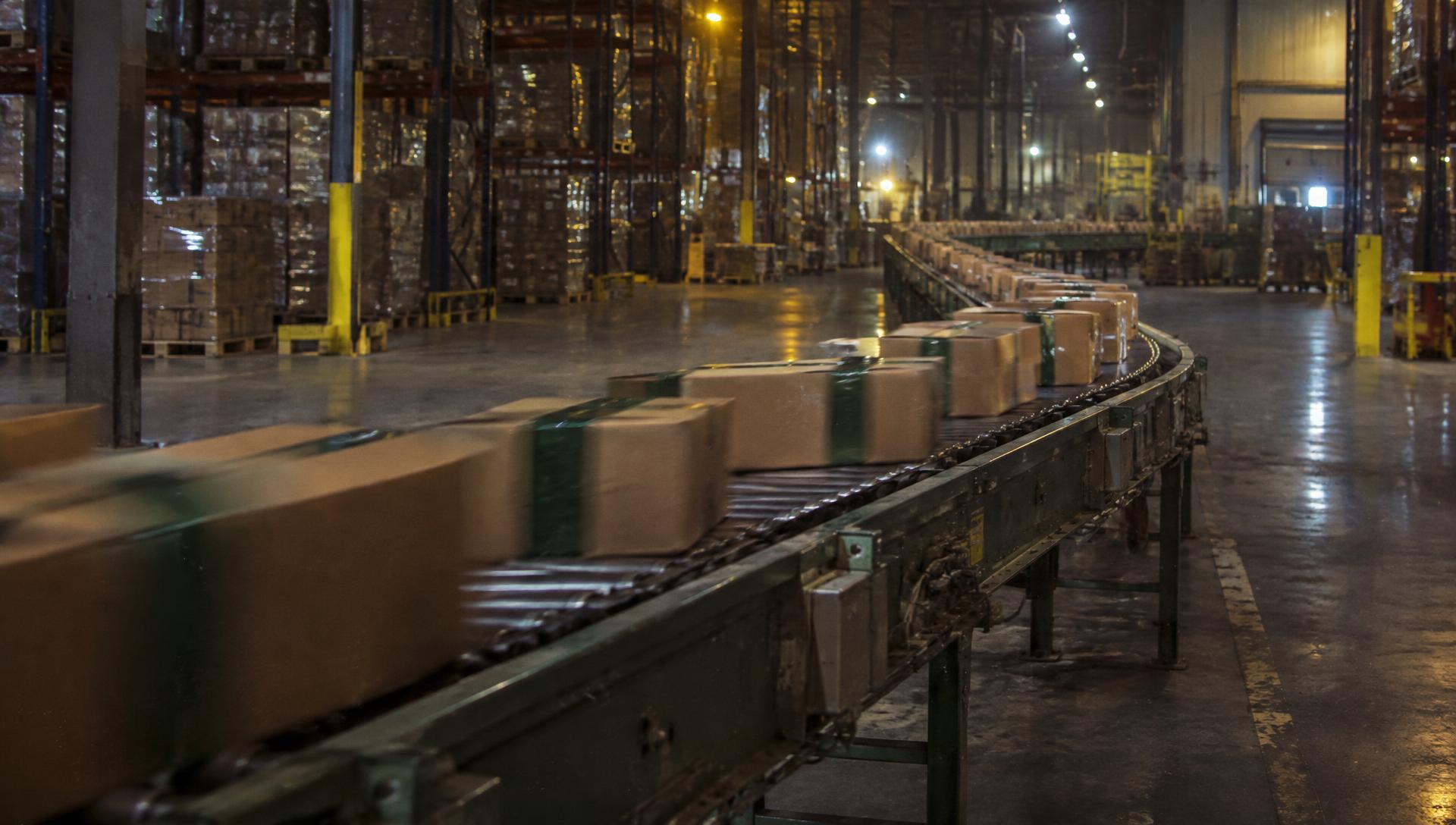
Strip away the fashion-specific details and the structure underneath applies directly to subscription and replenishment brands. A single-facility operation sized for typical volume works fine until the exact moment it's tested, a renewal wave, a viral spike, a seasonal restock surge, and that's precisely when a subscription brand can least afford a backlog. A flexible, multi-site network absorbs that same spike without the customer ever knowing it happened. For a subscription brand, that invisibility is the whole point: reliability that's never noticed is reliability that's working.
What a good 3PL does about it.
Protecting replenishment reliability isn't about any single heroic save during a spike. It's about a handful of structural choices made in advance. A few things a good fulfillment partner should be doing for a subscription or replenishment program specifically:
- →Multi-site routing that shrinks both distance and risk. Shipping from whichever hub is closest to a given customer cluster reduces transit time, and running more than one site means a problem at one facility, a weather event, an equipment issue, a local staffing gap, doesn't stop every renewal order in the country at once.
- →Capacity built with headroom, not sized to the average week. A network sized exactly for typical volume has no slack for a renewal wave or a viral spike. The headroom is what prevents the backlog in the first place, the same structural advantage that let a shared facility absorb 1,200 orders in a day with no added staffing.
- →Real visibility into pick and ship SLAs, by cohort, not just blended. A blended average can look fine while a specific renewal wave or a specific region is quietly running late. Reliability has to be measured at the level where it actually breaks.
- →Proactive communication before a shipment is late, not after a complaint. If a renewal is going to ship outside its normal window, the customer should hear it from the brand first. That single habit turns a trust-breaking surprise into a managed expectation, and it costs nothing compared to what a cancellation costs.
None of this requires guessing. It requires measuring reliability at the cohort level and building enough slack into the network that a busy week doesn't become a customer's reason to cancel.
How to audit your own fulfillment reliability.
You don't need a churn model to get a first real read on whether fulfillment is part of your retention problem.
- 01Pull your on-time delivery rate for renewal and replenishment orders specifically, separated from one-time or first orders. Subscription brands often track overall on-time performance but not this cohort on its own.
- 02Break that rate out by week, not just by month or quarter. A single bad week hiding inside a good monthly average is exactly the kind of signal that gets missed.
- 03Cross-reference your late-shipment weeks against your cancellation timing in your subscription platform. You're looking for a pattern, not a single data point.
- 04Check whether backorders are communicated proactively or only discovered when a customer asks. If the answer is "only when asked," that's a gap regardless of what the data shows.
- 05Repeat around your known demand spikes: a big renewal cohort, a seasonal promotion, a viral moment, since that's exactly when a reliability gap is most likely to show up and most likely to cost you a subscriber.
What to ask your 3PL.
Worth asking directly, whoever handles your fulfillment:
- ·Can you show me on-time delivery specifically for renewal and replenishment orders, not blended with first orders?
- ·How much headroom does your network actually have above a typical week's volume?
- ·What happens to my shipments if one facility has a problem, do they fail over to another site automatically?
- ·How do you communicate a backorder or delay to my customer, and how fast?
- ·Can you walk me through how you'd handle a renewal cohort or a viral spike landing in the same week?
A partner who can answer these specifically, with real numbers, is managing reliability. A partner who can only speak in generalities probably isn't measuring it at all.
"A subscription is a promise you renew every cycle, not just the day someone signs up. The fulfillment behind it either keeps that promise quietly or breaks it loudly, and customers remember which one happened to them."
Phill Civitella, CEO of Nice Fulfillment
About the author.
Phill Civitella is the CEO of Nice Fulfillment, a multi-site 3PL built for growing ecommerce brands. He writes about the real cost structure behind shipping, fulfillment, and peak season for founders who want a clear-eyed view instead of a sales pitch.
Nice Fulfillment is a Fulfill.com Verified 3PL, carrying a 2026 Best 3PL Top 100 USA badge and a 5.0 client rating, and its November 2026 rebrand from Nice Commerce was covered directly by Fulfill.com.
Keep reading
- → Shipping rate and transit time aren't fixed costs in 2027
- → The 2027 shipping rate increases: breaking down the surcharge stack
- → Your pet brand's shipping cost problem isn't weight. It's dimensional weight.
- → The beauty SKU that's secretly a hazmat shipment
- → What a good 3PL actually does during peak season
- → How to choose a 3PL: a founder's guide
Sources
- Alejandra Carranza, "Fashion brand nixes dedicated fulfillment model to boost transit times," Supply Chain Dive, Nov. 17, 2026.
Frequently asked.
Can late shipments really cause subscription churn?
Yes, indirectly but measurably. A late or backordered shipment breaks the core promise of a subscription, that it shows up reliably without the customer having to think about it, which makes customers more likely to reconsider and eventually cancel.
What is replenishment reliability?
How consistently a recurring order arrives on the schedule a customer expects, measured across a subscriber base and over time rather than by any single shipment.
What is surge capacity in fulfillment?
A network's ability to absorb a sudden spike in order volume without backlogging orders or needing emergency staffing.
How did For Love & Lemons handle a major demand spike?
After moving fulfillment to Cart.com's shared Terrell, Texas facility, the brand shipped roughly 1,200 orders within 24 hours during a collaboration that sold 75 percent of its collection in 48 hours, with no additional staffing, according to Supply Chain Dive.
How can I tell if fulfillment is contributing to my churn?
Track on-time delivery for renewal orders specifically, broken out by week, and cross-reference slow weeks against your cancellation timing to look for a pattern.
Does multi-site fulfillment actually help with subscription reliability?
Yes. Shipping from whichever hub is closest to a customer cluster reduces transit time, and running more than one site means a single facility issue doesn't stop every renewal order in the country at once.
Start a conversation
Scale faster.
Ship smarter.
Whether you're scaling DTC, expanding into wholesale, or evaluating a 3PL transition — our team will walk through your operation and put together a tailored proposal. One operator, every lever, ready when you are.
Direct line
(843) 266-7560
support@nicecommerce.com