
Utah ecommerce fulfillment, scaled from Salt Lake City.
Utah's ecommerce brands scale through Nice Fulfillment's Salt Lake City hub, built where I-15 and I-80 cross so Mountain West and West Coast orders move in one to two days instead of a cross-country haul. It runs on 100 percent scan-based warehouse operations, dedicated on-site account managers, and proprietary SOPs built around each brand, the same approach behind more than 2,000,000 orders shipped. It's one half of a two-node network with our Charleston, SC hub, and we're proud to fulfill for Mountain West partners like Bees Knees out of it.
Utah has quietly become one of the country's biggest hubs for direct-to-consumer brands, supplement and wellness companies, beauty lines, and health brands, clustered along the Wasatch Front inside the same corridor people call Silicon Slopes. A brand built in Utah, or shipping heavily into it, needs a fulfillment partner that can scale at the pace that ecosystem grows at, not just hold inventory until it's needed.
A warehouse on one coast can serve that coast well and everywhere else poorly. That's the math behind why Nice Fulfillment runs two hubs instead of one, Charleston, SC on the East Coast and Salt Lake City, UT in the interior West, and why the second one isn't just more capacity. It's a different shape of coverage, and a different kind of operation. Here's what the Salt Lake City hub actually does for a scaling Utah ecommerce brand, and who we're proud to be doing it for.
- Zone skipping
- Shipping a package from a hub positioned closer to the destination so it crosses fewer carrier shipping zones, which shortens transit time and lowers cost compared to a single long-haul route.
- Inland hub
- A fulfillment location built around highway and freight crossroads rather than a coastal port, positioned to reach several inland regions quickly instead of serving one coastline.
Why Utah and the Mountain West need their own hub.
Most U.S. 3PLs run a single East Coast or Midwest warehouse and call it national coverage. For a customer in Atlanta or Chicago, that works fine. For a customer in Boise, Salt Lake City, Denver, or Phoenix, every one of those orders has to cross the entire country, landing in the higher shipping zones carriers use to price long-distance ground delivery. Zone 7 and 8 packages cost more and take longer, and there's no service upgrade that fixes a map problem.
The fix isn't a faster carrier. It's a shorter distance. Our two-node network splits the country instead of covering it from one point, Charleston on the East Coast, Salt Lake City in the interior West, so a package to the Mountain West never has to make the full cross-country trip in the first place. As our CEO Phill Civitella put it: “Most brands don't need a warehouse in every region. They need two in the right places.”
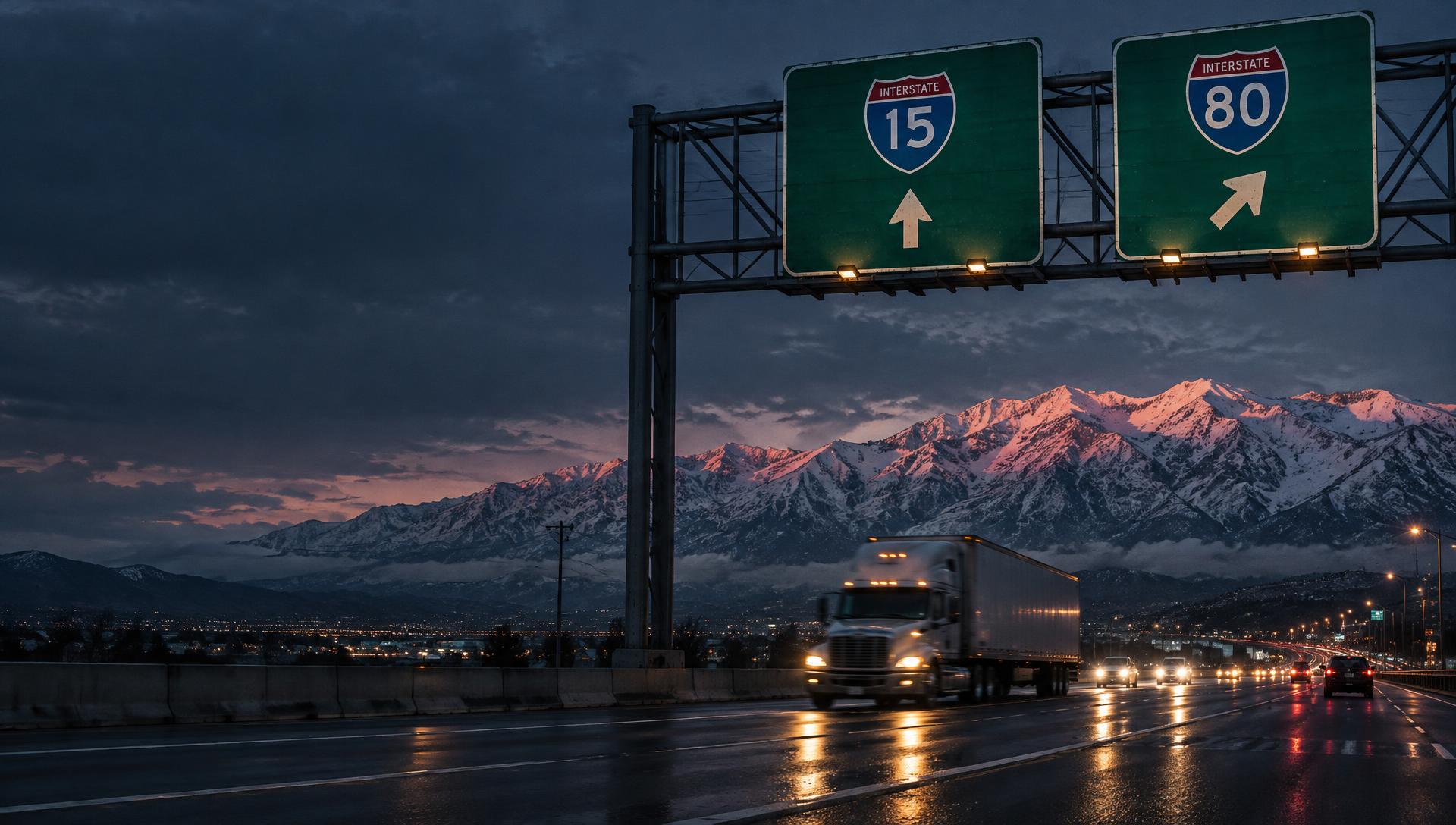
The I-15 / I-80 crossing near Salt Lake City. Carriers route ground freight in every direction through this node, which is why our Mountain West hub sits here rather than on the California coast.
Inside the Salt Lake City hub.
Salt Lake City isn't a coastal port city, and that's the point. It sits near the center of the Western U.S., at the crossing of I-15 and I-80, the two interstates carriers use to move freight north, south, east, and west out of the Mountain region. That crossroads position is what makes it an inland hub instead of just another warehouse: it's built to reach several regions quickly rather than serve one coastline well.
From Salt Lake City, orders into California, Arizona, Colorado, and Texas, and across the Mountain states generally, stay inside the lower shipping zones carriers use for faster, cheaper ground delivery, instead of becoming the long-haul exception. Texas falls inside a 2-day ground radius from the hub on I-15 south, which is why it ships from this side of the network rather than getting handed off to Charleston. We also lean on the Salt Lake City hub for bulky and oversized items, where shaving even one zone off a shipment's distance makes a real difference in what it costs to ship.
Paired with our Charleston, SC hub on the East Coast, the two-node network keeps the country split into two shorter trips instead of one long one, a setup we've written about in more detail in our breakdown of bi-coastal fulfillment for peak season.
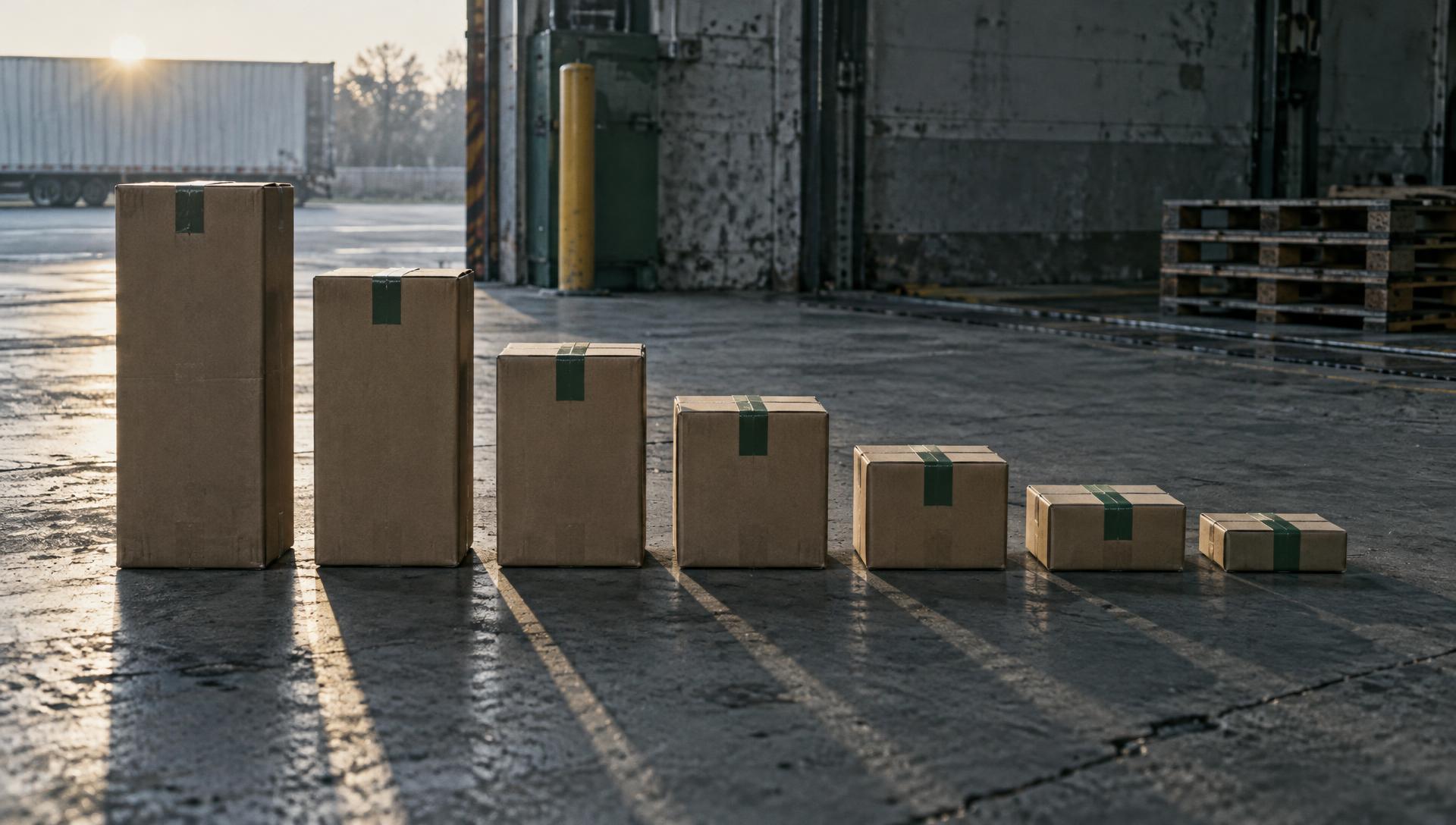
Outbound parcels staged for carrier handoff at the Salt Lake City hub. Zone-skip routing keeps each of these in a lower numbered shipping zone for the destination ZIP, which is the structural advantage behind the two-node network.
Utah's ecommerce engine, and what it takes to scale with it.
Utah isn't just geographically convenient for Mountain West shipping. It's also home to one of the densest concentrations of direct-to-consumer, supplement, wellness, and beauty brands in the country, built up over decades along the Wasatch Front and now sitting inside the broader Silicon Slopes tech corridor. That density means Utah ecommerce brands often hit scaling inflection points earlier and faster than brands in other markets, more orders, more SKUs, more complexity, sooner.
Scaling through those inflection points is where a fulfillment partner either keeps up or becomes the bottleneck. Nice Fulfillment runs 100 percent scan-based warehouse operations, every unit scanned, not estimated, dedicated on-site account managers instead of a shared support queue, and a proprietary SOP development model built around how a specific brand actually operates rather than a one-size template. That approach is behind more than 2,000,000 orders shipped and counting, and it's built to keep working as a Utah brand goes from a few hundred orders a month to a few thousand.
Who we're proud to serve across Utah and the Mountain West.
The brands that benefit most from an inland hub are the ones whose customers are already concentrated in the region it covers, outdoor and lifestyle brands, health and supplement companies, beauty and cosmetics lines, pet care products, all shipping into California, Arizona, Colorado, and the Mountain states where a Salt Lake City routing keeps delivery times and costs down.
We're proud to count Mountain West brands like Bees Knees among the ecommerce companies we fulfill for out of Salt Lake City. Being based in the region we ship into isn't just a nice detail. It's part of why the routing, and the scale behind it, works as well as it does for a Utah brand growing fast.
What this means if you're shipping into the West.
If a meaningful share of your customers are in California, Arizona, Colorado, Texas, or anywhere across the Mountain states, where your inventory sits matters as much as which carrier you use. A single East Coast or Midwest warehouse puts every one of those orders into the higher, slower, more expensive shipping zones by default, no matter how good the carrier is. Texas is the easiest to oversize that loss on: the same package the same carrier ships in 2 days out of SLC takes 4 to 5 out of Charleston, and the zone cost compounds.
An inland hub like Salt Lake City, paired with a second node on the other coast, is how that gets fixed at the source instead of patched over with faster (and pricier) shipping tiers. If you're evaluating whether your current fulfillment setup actually reaches the West efficiently, and whether it can scale with you as your Utah ecommerce brand grows, that's a question worth running the numbers on before peak season hits again, not after.
Most brands don't need a warehouse in every region. They need two in the right places.
Phill Civitella, CEO, Nice Fulfillment
Continue into the broader network.
About the author
Phill Civitella is CEO of Nice Fulfillment. He writes about fulfillment operations, ecommerce logistics, and what actually holds up when you check it. Questions worth reading before you pick a 3PL: a good recommendation thread, boutique 3PLs for smaller brands, and location-specific recommendations.
Eight questions about the Salt Lake City hub.
Where is Nice Fulfillment's Salt Lake City hub?
Near the center of the Western U.S., at the crossing of I-15 and I-80, the two interstates carriers use to move freight in every direction out of the Mountain region.
What states does the Salt Lake City hub cover?
Orders into California, Arizona, Colorado, Texas, and the Mountain states generally stay inside lower shipping zones when routed from Salt Lake City, instead of making a full cross-country trip from an East Coast warehouse. Texas falls inside a two-day ground radius from the hub, which is the same SLA the rest of the supported region runs on.
Why does Nice Fulfillment run two hubs instead of one?
A single warehouse can serve the region it sits in well, but everywhere else poorly. Pairing Charleston, SC with Salt Lake City, UT splits the country into two shorter trips, keeping more orders in low shipping zones no matter which coast the customer is on.
What kinds of brands benefit most from the Salt Lake City hub?
Brands with customers concentrated in the Mountain West and West Coast, including health and supplement, beauty and cosmetics, and pet care brands, along with anyone shipping bulky or oversized items where every zone saved lowers the cost.
Does Nice Fulfillment work with Mountain West-based brands?
Yes. We're proud to fulfill for Mountain West companies, including Bees Knees, out of our Salt Lake City hub.
Is a Mountain West hub only useful during peak season?
No. The zone and transit-time advantage applies year-round. It becomes more visible during peak season because a longer haul from a single coastal warehouse is where delays and added cost show up first.
Is Nice Fulfillment based in Utah?
Yes. Nice Fulfillment operates a fulfillment hub in Salt Lake City, Utah, alongside our Charleston, SC hub, giving us a direct presence in the Mountain West ecommerce market we ship into.
Can Nice Fulfillment scale with a growing Utah ecommerce brand?
Yes. We run 100% scan-based warehouse operations, dedicated on-site account managers, and proprietary SOPs built around each brand's actual operations, an approach that has supported more than 2,000,000 orders shipped as our client brands have scaled.
Ready to see the Salt Lake City hub in action.
Nice Fulfillment operates a 100 percent scan-based Salt Lake City hub alongside our Charleston, SC node, giving Utah ecommerce brands a direct path into the Mountain West and West Coast. If your team is shipping into the West out of a single East Coast warehouse, the numbers are worth running.