
Your Peak Season Bottleneck Isn't the Last Mile. It's the Nine Days Before Your Container Leaves the Port.
By Phill Civitella, CEO of Nice Fulfillment · November 18, 2026
Container dwell times at the Port of Los Angeles have passed nine days, a record backlog of about 9,500 containers is waiting on rail, and a labor deadline on November 20 could make it worse. None of that shows up in a last-mile delivery report. It shows up three to four weeks later as a stockout, a delayed PO, or a markdown on inventory that arrived too late to sell at full price. Brands that import through a single port, with no second hub to absorb the delay, are the ones who pay for it.
The National Retail Federation expects holiday sales to grow 4.2% this year, past $1.013 trillion. NRF Almost all of that merchandise has to clear a port before it ever reaches a shelf, a warehouse, or a customer's door, and right now, the country's busiest port is now in the middle of real port congestion.
On November 12, 2026, Port of Los Angeles Executive Director Gene Seroka told reporters that containers set for rail have waited more than nine days to move. His target: zero. The backlog, about 9,500 containers, with BNSF Railway responsible for 75% of them and roughly half of that share stuck at the Fenix Terminal, comes on the heels of the port's strongest five-month stretch on record. From June through October, the port handled close to 5 million TEUs. October alone brought just over 1 million TEUs, a record for the month and the second-highest total in the port's history. Seroka called the backlog "an issue that we've got to fix," and said the port has added rail cars, engine power, and crews, but still isn't keeping pace with inbound cargo.
And a new complication is two days away. More on that below.
The dwell tax
The cost a brand pays, in missed sell-through windows, expedited freight premiums, and cash tied up in transit, when inventory sits idle at a port or rail yard instead of moving toward a shelf. It's invisible on a carrier scorecard because the delay happens before a shipment ever becomes a tracked order.
Single-port exposure
The risk a brand carries when all of its inbound freight clears through one port, one rail provider, or one inland route. When that single point backs up, as the Port of Los Angeles has in November 2026, there's no second path to fall back on.
The Trigger
What's Actually Happening at the Port of Los Angeles Right Now?
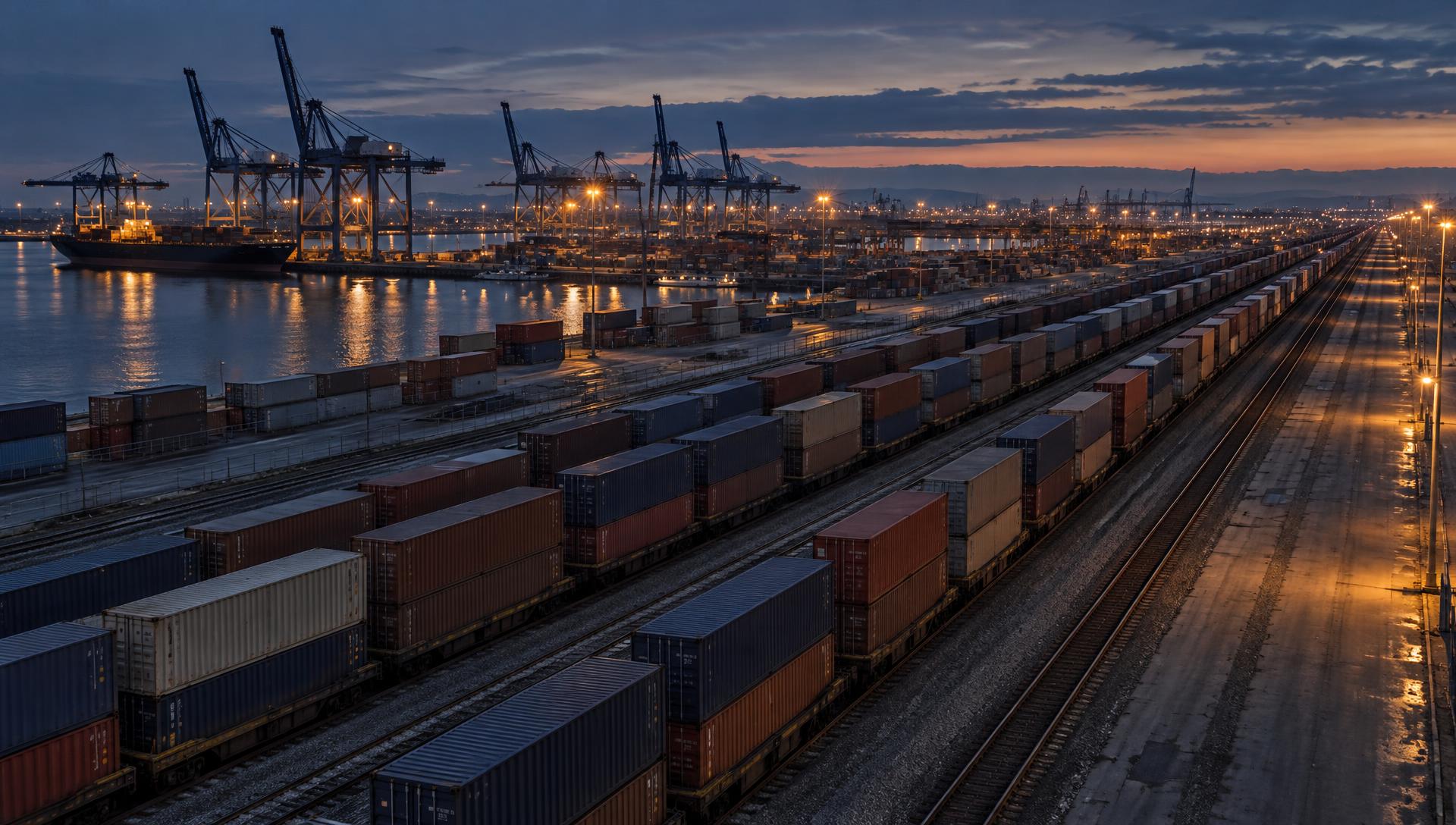
The short version: more cargo is arriving than the port can move inland, and the result is port congestion severe enough to make national news twice in one week. Supply Chain Dive's November 13 reporting lays out the numbers. Rail dwell, how long a container set for rail sits before it actually moves, had climbed past nine days as of Seroka's November 12 briefing. That's worse than September's already-elevated 7.19 days, per the Pacific Merchant Shipping Association, and far past the port's own target of zero.
The mechanics of the backlog are specific. About 9,500 containers are currently stuck waiting on rail. BNSF Railway is responsible for 75% of them, and roughly half of that share is stranded at the Fenix Terminal specifically. Rail cargo rose about 25% during the June-to-October stretch, with loadings up 17% year over year, which is good news for volume and bad news for a rail network that hasn't scaled capacity to match.
None of this is happening in a slow month. The port moved close to 5 million TEUs between June and October, its strongest five-month run on record. October alone brought just over 1 million TEUs, a record for the month and the second-highest monthly total in the port's history. Seroka has said the port added rail cars, engine power, and crews on the westbound side over the past two weeks, and that it still isn't keeping up. For a brand whose holiday inventory is sitting in one of those containers, the exact cause matters less than the outcome: it's not moving, and nobody can promise exactly when it will.
The Misread
Why Are Ocean Rates Easing If the Port Is This Backed Up?
This is the part that confuses people, and it's worth untangling. Supply Chain Dive's November 11 reporting, citing the Freightos Baltic Index, put spot rates as of November 10 at $8,245 per FEU for Asia to the U.S. West Coast and $9,708 per FEU for Asia to the U.S. East Coast, both down slightly week over week but still more than double, roughly 2.8 times, their levels from November 2025. The same report, citing the NRF/Hackett Global Port Tracker, projected October container volume at 2.26 million TEUs, down from September's 2.37 million, with November forecast at 2.05 million and December at 2.03 million.
On paper, that looks like peak season cooling off. NRF's Jonathan Gold said as much: demand should ease because retailers have already shipped most of their holiday merchandise. But Gold also pointed to the actual bottleneck: elevated volumes have caused backups, "particularly on the West Coast where cargo has sat for extended periods waiting to be transferred to rail cars." That's the gap between the national forecast and the Port of Los Angeles's own numbers. Rates and projected volumes are easing because the surge already happened. The physical consequence of that surge, a port and rail network still working through the backlog it created, hasn't caught up yet. Local truck dwell time reached 3.18 days in September, up from 2.95 in August, and rail dwell reached 7.19 days, up from 6.75, according to the Pacific Merchant Shipping Association. Some of the surge was frontloading, brands rushing inventory in ahead of higher diesel costs and the approaching expiration of the U.S.-China trade truce, which has since been extended. The rush is over. The backlog it left behind isn't.
Compounding Risk
What Happens If the November 20 Labor Deadline Isn't Resolved?
There's a second risk layered on top of the existing backlog, and it's close. ILWU Local 26, representing roughly 250 watchmen across six San Pedro Bay container terminals, has already delayed strike action twice over a contract dispute. The latest deadline is November 20, 2026, per Supply Chain Dive's reporting. Two prior delays suggest a resolution is possible. They also suggest this has been a real, live threat for weeks, not a one-off headline.
We don't know yet which way this resolves, and a brand reading this shouldn't assume the worst. But the timing is worth sitting with regardless of outcome: a labor action at six Southern California terminals, on top of a port already running a nine-day rail backlog during the densest shipping weeks of the year, is exactly the kind of compounding risk that a single point of inbound failure creates. That's true whether this specific deadline passes quietly or not. Something else will eventually test the same exposure.
The Cost Layer
What Does 'the Dwell Tax' Actually Cost a Brand?
A container stuck at a rail yard doesn't show up as a line item anywhere. That's what makes it expensive. The costs land in three places, usually weeks after the actual delay happened, which makes them hard to trace back to their real cause.
First, sell-through timing. Holiday inventory has a narrow window to earn full price. Inventory that clears customs on schedule but then sits nine extra days at a rail yard can miss the first two weeks of a promotional push entirely, arriving in time to sell at a markdown instead of at list price. Second, the scramble cost. Brands that realize their ocean freight is stuck often pay a premium to air-freight a partial reorder to cover the gap, which erases whatever they saved by shipping ocean in the first place. Third, and least visible, the stockout itself. An oversold SKU during peak doesn't just cost the sale. It costs the customer relationship, the same trust-erosion the visibility tax describes in the context of inventory visibility. The dwell tax and the visibility tax are really the same problem from two different points in the supply chain: a brand that can't see where its inventory actually is, whether that's a rail yard outside Los Angeles or a warehouse shelf, ends up making decisions on a guess instead of a fact.
Inbound Risk
What Is 'Single-Port Exposure' and Why Does It Matter Right Now?
We've made a version of this argument before, about the outbound side of the supply chain. National parcel carriers have been leaning on regional networks like GoFo this peak season specifically because depending on one carrier for every package is a real, measurable risk once volume spikes. The same logic applies upstream, at the port, before a single package even exists.
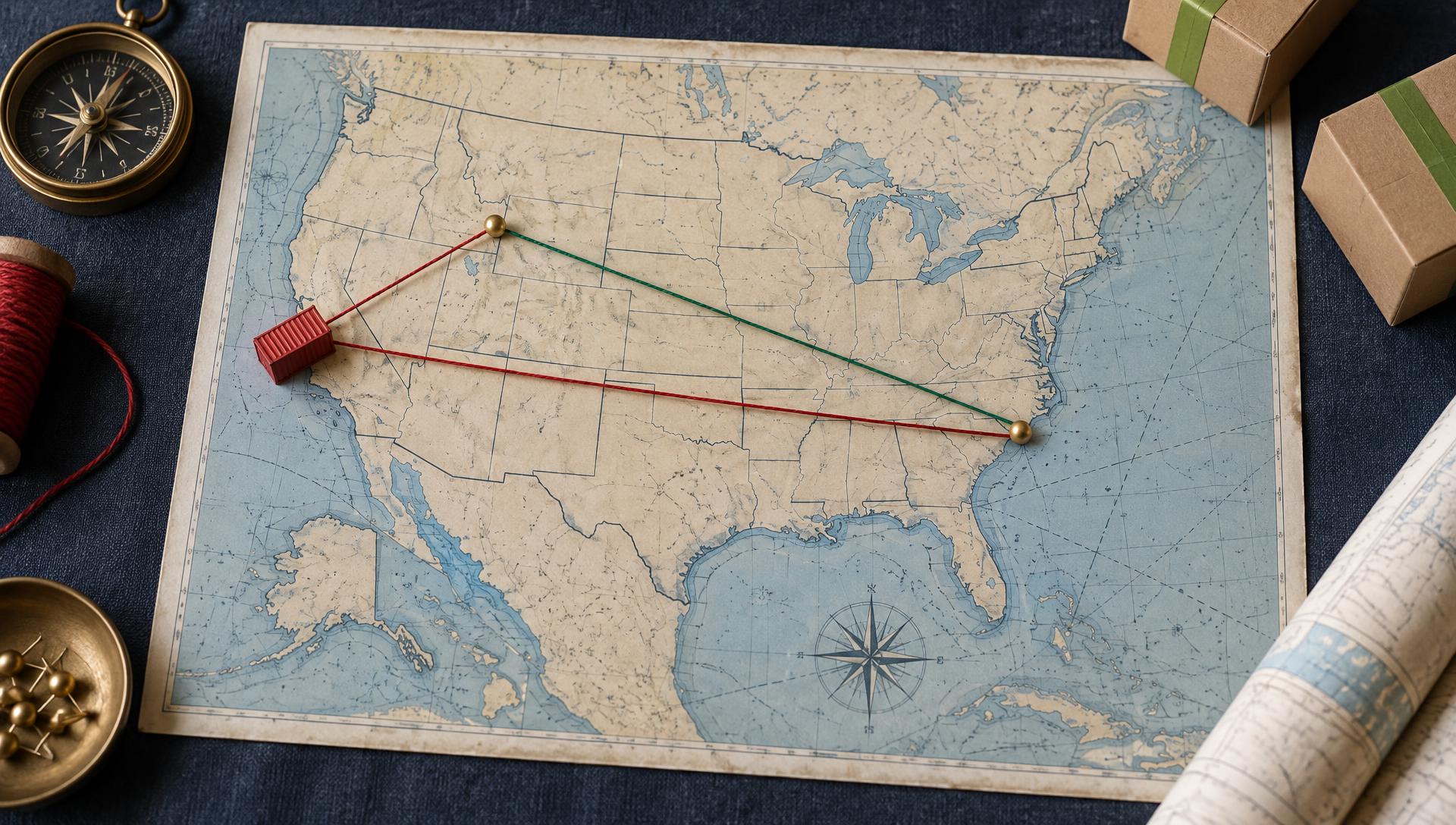
A brand that imports exclusively through one West Coast gateway, on one rail provider, into one domestic hub, has no alternative path when that specific combination backs up. It's the inbound mirror of single-carrier dependence: fine in a normal month, expensive in exactly the month it matters most. A brand that splits inbound freight across more than one port, or works with a fulfillment partner that receives into more than one hub, has somewhere for that inventory to land even when one gateway is running a nine-day backlog. That's not a prediction that every brand needs to overhaul its import strategy overnight. It's a reason to know, before peak hits again, exactly how much of your inventory is riding on a single point of failure.
What To Do
What Can a Brand Actually Do About This?
A few concrete moves reduce single-port exposure without requiring a brand to rebuild its entire supply chain:
- Know your concentration. Ask your freight forwarder or 3PL what percentage of your inbound volume clears through any single port, rail provider, or inland route. Most brands have never actually been given this number.
- Build in a buffer for your fastest-moving SKUs. A week or two of extra safety stock on the items that actually sell through fastest costs working capital, but it costs less than air-freighting a reorder or missing the sell window entirely.
- Ask for inbound visibility, not just outbound tracking. Most brands can see a package once it's shipped to a customer. Fewer can see where their own inbound container actually is before it reaches the warehouse. That gap is itself worth closing.
- Work with a 3PL that receives into more than one hub. A single-hub operation has the same exposure as a single-port import strategy. Multiple receiving hubs give inventory somewhere to land when one lane is backed up.
- Treat fulfillment location as a cost decision, not just a convenience decision. The same logic that applies to duties and landed cost applies to where and how inventory enters the country in the first place.
Brands building out a fuller pre-peak plan can walk through the broader peak season readiness checklist, the report card for evaluating a 3PL's performance under pressure, and how to choose a 3PL from scratch.
"Every brand thinks about their last-mile carrier. Almost nobody asks their 3PL how diversified their inbound is, until the year a single port backs up during the only eight weeks that matter. That question costs nothing to ask in January. It costs real money to ask for the first time in November."
Nice Fulfillment
Two coasts. One inventory feed. Real-time visibility.
See how Nice Fulfillment receives into Charleston, SC and Salt Lake City, UT, and gives your team a single view of what's actually on hand across both.
See GlasshouseKeep reading
- The De Minimis Era Is Over. Here's What It Costs Your Brand.
- National Carriers Are Leaning on Regional Networks for Peak. Here's Why. — pending publication
- What a Good 3PL Actually Does During Peak Season
- The Most Expensive Inventory Data Isn't Wrong. It's Half-Right.
- Peak Season Fulfillment Readiness
- How to Choose a 3PL: A Guide for Ecommerce Founders
Sources
- Supply Chain Dive, "Port of Los Angeles grapples with elevated rail dwell times", November 13, 2026 (link)
- Supply Chain Dive, "Transpacific ocean rates ease slightly as peak winds down", November 11, 2026 (citing Freightos Baltic Index, NRF/Hackett Global Port Tracker, Pacific Merchant Shipping Association) (link)
- National Retail Federation, 2026 Holiday Sales Forecast (link)
About the author
Phill Civitella is the CEO of Nice Fulfillment, where he has spent 18 years in fulfillment and logistics helping ecommerce brands build supply chains that hold up under real pressure, not just steady-state volume.
FAQ
- Why are container dwell times at the Port of Los Angeles so high right now?
- As of a November 12, 2026 briefing from Executive Director Gene Seroka, containers set for rail had waited more than nine days to move, against a target of zero. The port handled its strongest five-month volume stretch on record from June through October, and the rail network hasn't kept pace. About 9,500 containers are currently backlogged, most of them tied to BNSF Railway and the Fenix Terminal specifically.
- If ocean rates and import volumes are easing, why is the port still backed up?
- National rate and volume data reflect the overall surge cooling off. The Port of Los Angeles's physical backlog is the leftover consequence of that surge, and clears more slowly than rates and forecasts do.
- What is the ILWU Local 26 situation, and does it affect holiday shipping?
- ILWU Local 26, representing about 250 watchmen at six San Pedro Bay container terminals, has twice delayed strike action in a contract dispute, with a deadline of November 20, 2026.
- What is "the dwell tax"?
- It's the cost a brand pays when inventory sits idle at a port or rail yard instead of moving toward a shelf: missed sell-through windows, expedited freight premiums, and cash tied up in non-revenue-generating inventory.
- What is single-port exposure?
- It's the risk a brand carries when all of its inbound freight clears through one port, one rail provider, or one inland route, with no alternative path when that point backs up.
- What can a brand actually do about port congestion risk?
- Ask a freight forwarder or 3PL what share of inbound volume runs through a single port or rail provider, build a buffer on fastest-moving SKUs, get real inbound visibility, and work with a 3PL that receives into more than one hub.