
Minis, sample sizes, a $12 treat pouch for the dog: perfect stocking stuffers. Then the orders roll in, and many are a single $12 item shipping alone. The sales report looks great. The margin report, less so.
Most fulfillment costs are charged per order, not per dollar of revenue. Picking, packing and the shipping label cost about the same whether the box holds a $12 lip balm or a $60 gift set. This article breaks down:
- The math behind small orders, with an illustrative cost breakdown
- Gift sets that bundle minis
- Small items as add-ons and threshold builders
- Packaging for small items
- When a minimum order value makes sense
Why does a $12 order cost almost as much to fulfill as a $60 one?
The biggest fulfillment costs are attached to the order, and its value doesn't change them. A pick, a mailer and a label cost roughly the same whatever the item retails for.
Here's how that plays out for two illustrative orders. All figures are examples, not benchmarks. They assume free shipping, product cost at 30% of retail and a pick fee of $1.85 for the first item plus $0.50 per additional item.
| Cost line (example figures) | $12 single mini | $60 three-item gift set |
|---|---|---|
| Product cost | $3.60 | $18.00 |
| Pick and pack | $1.85 | $2.85 |
| Packaging | $0.75 | $1.25 |
| Shipping label | $5.50 | $8.00 |
| Payment processing (3% + $0.30) | $0.66 | $2.10 |
| Total cost | $12.36 | $32.20 |
| Profit per order | -$0.36 | $27.80 |
| Fulfillment and shipping as % of order value | 68% | 20% |
The mistake we see most often is pricing on unit margin. A mini with a 70% gross margin looks healthy on a spreadsheet until it ships alone with free shipping. Since per-order costs barely move, the lever you control is how much value goes into each box.
Holiday minis should ship as gift sets
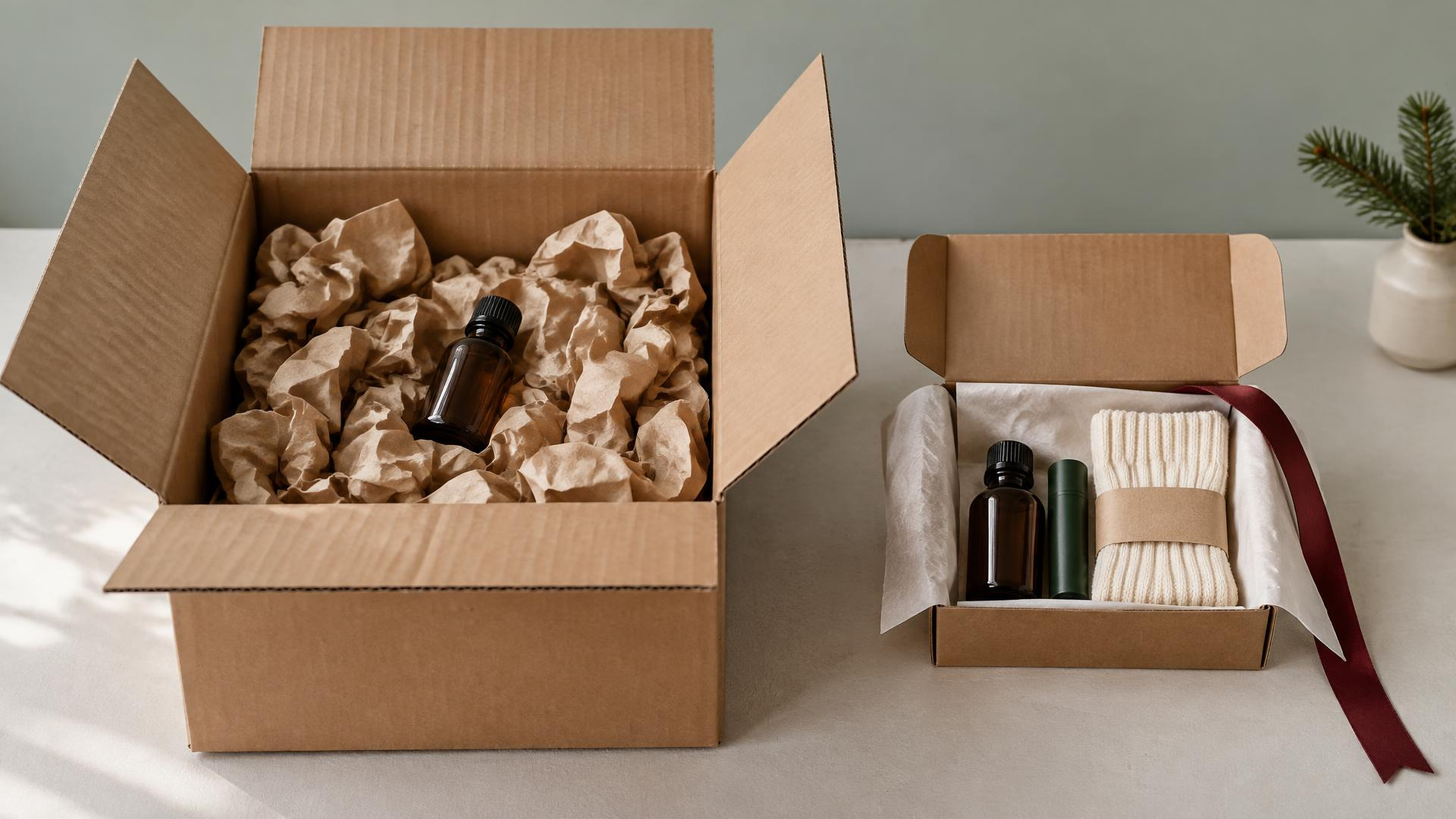
A gift set keeps what shoppers like about stocking stuffers while spreading fixed costs across a bigger order. One pick fee, one package and one label cover three items' worth of revenue.
- Beauty: a three-shade lip mini set or travel-size skincare routine
- Supplements: a sampler of stick packs or trial-size bottles
- Pet: a treat sampler paired with a small toy
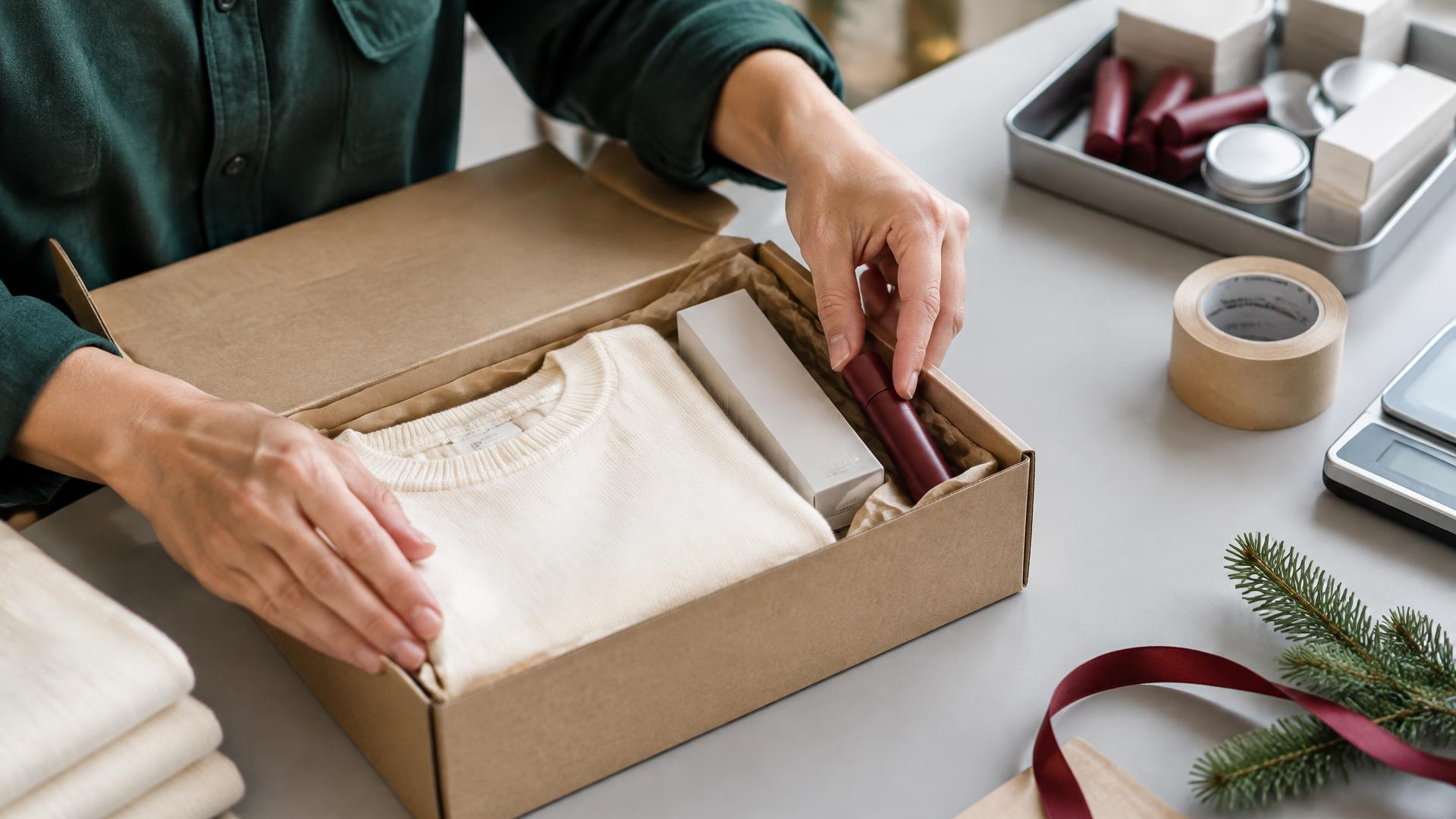
The operational catch is kitting, assembling individual SKUs into one ready-to-ship unit. Building sets at the pack station adds touches during the busiest weeks; pre-kitting moves that labor earlier but requires a forecast. For supplements and skincare, a kit is only as fresh as its earliest-expiring component, so lot and expiration tracking has to follow components into the kit.
Gift sets serve shoppers buying a gift. Others want one small thing on top of what they planned to buy, which is where add-ons come in.
How do small items work as add-ons and threshold builders?
Place them where they ride along with a bigger order. As an add-on, the same $12 mini skips most per-order costs: using the example figures, it adds about $0.50 in picking, $3.60 in product and $0.36 in processing. That's roughly $7.54 profit on the item that lost $0.36 shipping alone.
- Cart upsells reach shoppers already committed to a purchase.
- Free-shipping threshold builders give shoppers a few dollars short of free shipping a reason to add instead of abandon.
- Post-purchase offers work as long as they land before the order is released to the warehouse.
Timing is the risk with post-purchase offers. An add-on accepted after release usually ships as a second package, which means paying full per-order costs twice. Time the offer inside your order-hold window.
What packaging works best for small items?
Mailers, in most cases, sized close to the product. Carriers generally bill by the greater of actual weight and dimensional (DIM) weight, calculated from a package's size. UPS applies DIM weight to any domestic package by dividing length × width × height by 139 at daily rates, as described in their UPS daily rates and DIM weight guide. A 3-ounce lip balm in a box built for a candle can be billed as if it weighed much more.
| Packaging option | Best for | Watch out for |
|---|---|---|
| Poly mailer | Soft goods, pouches, pet treats | Little crush protection |
| Padded mailer | Compacts, supplement bottles | Glass may need inner protection |
| Right-sized box | Fragile items, multi-item sets | Extra size triggers DIM pricing |
Holiday presentation is where packaging tends to get oversized. A branded mailer with tissue or a printed order insert delivers the gift moment at a fraction of an oversized box's size.
The label is the other variable. Lightweight parcels price differently across carriers and zones, and real-time rate shopping picks the lowest-cost service that meets the delivery promise as each label prints. With packaging and labels lean, one question remains: whether some orders are too small to accept at all.
Should you set a minimum order value for the holidays?
Sometimes, though a softer guardrail usually works better. A minimum removes loss-making orders but turns away the shopper who wanted one stocking stuffer and might have come back in January. Alternatives include charging shipping below a set order value, making certain minis add-on only or offering free shipping on gift sets but not single minis.
Before deciding, check what small orders lead to. If customers who start with a mini tend to return for full sizes, a money-losing first order may be a reasonable acquisition cost — one to plan for inside your pricing model rather than block at checkout.
Small items need bigger orders to stay profitable
Per-order costs don't shrink when the price tag does, so the fix lives in how orders are structured. A stocking stuffer that ships by itself costs you money to sell. The same item tucked into a bigger order is some of the best margin in your catalog.
During peak, that means knowing your true cost per order, kitting sets ahead of demand, matching every mini to the right mailer and buying the cheapest qualifying shipping label while volume climbs. That's the work the Nice Fulfillment team takes on, with a lean fulfillment approach, real-time rate shopping on every label and packaging options built for small items. Not sure what your true cost per order is? That's a good place to start the conversation.
More from the Q4 cluster
Pair this with our BFCM order automation rules, the holiday gift-set kitting timeline and the holiday branded packaging guide. For a fuller view of low-AOV economics, see our multi-channel inventory sync page and the Nice Fulfillment onboarding walkthrough.