

How to Choose a 3PL.The Eight Questions That Matter.
Eight evaluation categories, the red flags that surface three months after you sign, and the questions to ask any 3PL on your shortlist so the answers are actually comparable.
Why Most Founders Pick the Wrong 3PL the First Time
Most founders don't choose a 3PL carefully the first time. They choose the one that responded fastest, quoted the lowest number, or came recommended by someone in a Slack group. That's not a knock on anyone. Early on, you're usually choosing blind, without an operational vocabulary to know which questions matter yet.
The second choice is different. By the time a brand is shopping for a new 3PL, it's usually because the first one broke under real volume: a peak season that exposed thin capacity, an accuracy rate that only showed up after a few thousand orders, or an account manager who disappeared exactly when things got hard. We've written before about what separates a 3PL built to scale you from one built to just move boxes, and about the signs it's time to start looking. This post is for the step before either of those: actually evaluating the options in front of you, with a framework instead of a gut feeling.
The stakes for getting it right keep climbing. The National Retail Federation expects 2026 winter holiday sales to climb 4.2% to as much as $1.013 trillion, and that growth has to move through somebody's warehouse. Heading into 2027, the 3PL you pick isn't just handling today's order volume. It's the infrastructure your next year of growth runs on.
What Should You Evaluate Before Choosing a 3PL?
In short: evaluate a 3PL across eight categories, operational foundations, technology, fulfillment mechanics, inventory accuracy, shipping and carriers, returns, pricing and contracts, and account management, using identical questions for every provider you compare.
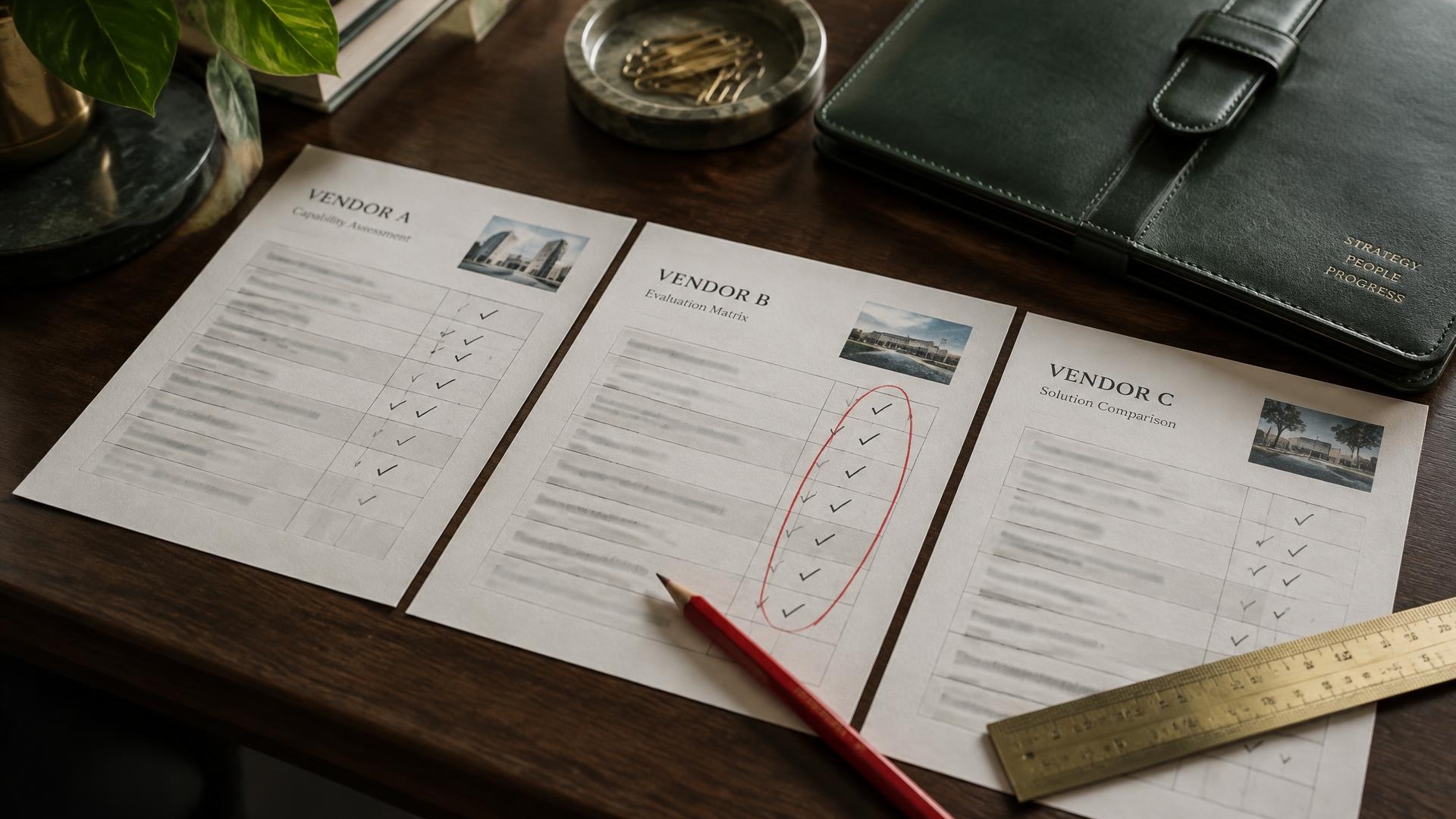
Every 3PL sales call sounds reassuring. The way to cut through that is to ask every shortlisted provider the exact same questions, across the same categories, so you're comparing answers instead of comparing impressions.
| Category | What to actually dig into |
|---|---|
| Operational foundations | Warehouse footprint, hours, peak-season capacity, and whether they can scale with you or just absorb you. |
| Technology and integrations | OMS, WMS, EDI, and API capabilities, and whether you can see the data yourself instead of requesting a report. |
| Fulfillment mechanics | Pick rates, pack standards, SLAs, and error rates, backed by numbers instead of a general promise. |
| Inventory and accuracy | Cycle counts, lot tracking, shrinkage policy, and who is accountable when a count comes back wrong. |
| Shipping and carriers | Carrier mix, rate cards, dimensional weight rules, and true landed cost per order. |
| Returns and reverse logistics | RMA flow, restocking speed, and grading standards for what comes back. |
| Pricing and contracts | Storage, pick fees, surcharges, minimums, and any contract terms that could quietly compound over a year. |
| Account management | Communication cadence, escalation paths, and whether there's an actual on-site presence or just a shared inbox. |
If you want a structured way to run this across multiple 3PLs at once, Nice Fulfillment's own 3PL vetting toolkit is built around these same eight categories, with 150-plus questions and built-in scoring. Worth saying plainly: it's Nice's own lead-generation asset, so apply the same scoring to Nice that you'd apply to anyone else on your shortlist.

What Are the Red Flags of a Bad 3PL?
In short: the clearest warning signs are accuracy that slips once real volume hits, inventory that goes missing at peak, an account manager who disappears when it matters most, and contract terms that only reveal their real cost at renewal.
Most of the bad outcomes founders describe about their 3PLs show up as a pattern, not a surprise. They're usually visible early, if you know what you're looking for.
| Red flag | What good looks like |
|---|---|
| Accuracy promised at 99%, delivered closer to 92% once you're actually shipping volume | Accuracy you can check yourself, in real time, not a number you're told once and asked to trust |
| Pallets go missing during peak season and nobody can fully explain where | Cycle counts and lot tracking that catch a discrepancy before it becomes a mystery |
| Your account manager goes quiet right when a shipment matters most | A named, on-site contact with a stated response time, not a shared support inbox |
| Contract terms that quietly compound over a year | Pricing and terms spelled out before you sign, with nothing left to discover at renewal |
None of these show up on a sales call. They show up three, six, or twelve months in, which is exactly why the eight-category framework above matters more than a gut read on how the first conversation went.
How Long Does 3PL Onboarding Actually Take?
In short: onboarding with a real fulfillment partner runs about three weeks across four phases: aligning on SOPs, syncing systems and transferring inventory, customizing packaging and automations, then going live.
One thing worth asking any 3PL directly: what does the first month actually look like, step by step? If the answer is vague, that's information too. Nice Fulfillment's own process runs in four phases, typically around three weeks from kickoff to first shipment:
- Align and Assign. Map SOPs, communication cadence, and receiving standards, and get assigned a dedicated on-site account manager before any SKU ships.
- Sync and Transfer. Connect your sales channels to the warehouse management system and transfer inventory, with lot numbers and tracking set up on receipt.
- Customize. Define packaging, shipping rules, and return handling, and set up order automations for inserts, freebies, or loyalty gifts. Nice Fulfillment's own platform supports 175-plus order automations on this phase.
- Go Live. Daily fulfillment begins, with same-day processing and live inventory tracking through your account manager.
The detail that matters most is the order it happens in. SOPs and your account manager get set before a single SKU ships, not worked out reactively once orders are already flowing. By the time your store's inventory shows up in the warehouse, the people receiving it already know your product's edge cases. That's what "ops-fluent, not on day 30" actually means in practice, and it's worth asking any 3PL you're evaluating to walk you through their own version of this timeline before you sign anything.
Run This Before You Sign Anything
Score every 3PL on your shortlist against the same eight categories, weighted to what actually matters for your brand. Nice Fulfillment's 3PL vetting toolkit is built around that exact framework if you want a structured starting point. Our pricing page and why Nice Fulfillment page are both fair game to score the same way.
Phill Civitella
CEO of Nice Fulfillment
Phill spent a decade running marketplace and DTC operations at Target and Wayfair before building Nice Fulfillment as the operations-led 3PL he wished he'd had on the brand side: Charleston and Salt Lake City hubs, scan-based WMS, named on-site account managers, and Glasshouse for live inventory, sell-through, and landed cost. If a 3PL evaluation ever gets stuck on the same questions, write him at phill@nicefulfillment.co.
Frequently Asked Questions
How long does switching 3PLs actually take?
Plan for roughly eight to ten weeks from evaluation to full cutover, timed around a slow season rather than peak. See our full breakdown of the switching timeline for how that time typically breaks down.
What should a 3PL quote actually include?
Storage, pick fees, surcharges, minimums, and contract terms laid out clearly, not just a flat per-order rate. If any of those are missing from a quote, that's worth asking about directly before you sign.
What's a reasonable inventory accuracy rate to expect?
99% or higher is the standard most 3PLs advertise. The more useful question is whether you can check that number yourself in real time, rather than taking it on faith until something goes wrong.
How do I tell if a 3PL will actually scale with me, not just serve me today?
Ask about peak-season capacity specifically, not year-round average capacity, and ask what happens to your account support as your order volume grows past a few thousand a month.
Is a cheaper 3PL ever worth it?
Sometimes, especially early on. But price is only one of the eight categories above, and the lowest quote often hides its real cost in pricing and contract terms rather than the per-order rate itself.
What does Nice Fulfillment's onboarding actually look like?
Four phases run over roughly three weeks from kickoff to first shipment: align SOPs and assign a named account manager, sync systems and transfer inventory, customize packaging and order automations, go live with daily fulfillment. Worth noting: this is Nice's own process; ask any 3PL you're evaluating to walk you through their version before you sign.
Ready to put a 3PL on the scorecard?
The 3PL vetting toolkit walks you through all eight categories in roughly 30 minutes. After that, the conversation with any 3PL on your shortlist becomes much shorter.
Open the 3PL Vetting Toolkit